The Resilience of Brazil’s Atlantic Forest
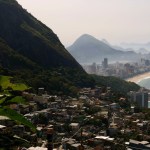
Without adequate natural and institutional buffers, infrastructure or an effective government, the residents of the communities within the Atlantic Forest can only further degrade their surroundings, making the area vulnerable to disease, climate change, and natural disasters. The government has acknowledged problems, but have yet to affect positive changes to increase the resilience of the Atlantic Forest’s socioecosystem. 
The Snowflake Theory
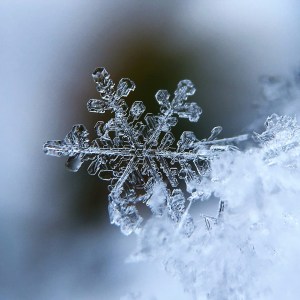
Each country has many factors which affect its development. To generalize causes of failure and necessary improvements is to disregard the fact that each country is different, and needs a unique approach for healthy and sustainable development. What works for some countries doesn’t work for others, and implementing the same program in two countries will not necessarily yield the same result.
Kaka’ako for Who
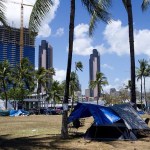
Kaka’ako is one of Honolulu’s neighborhoods that is home to approximately 12,000 residents and 1,260 businesses in a variety of industries. The construction and redevelopment of Kaka’ako is projected to double the population over the next 15-20 years, but questions have been raised. Whose needs are being served by the redevelopment and who is excluded? Are the voices of those who have rights to the city being incorporated and being defined by culture and social practice, rather than by capital? The accelerated development of Kaka’ako has sparked excitement in some and concern in others, as the forces of neoliberal development advance economic segregation and deepen conflicts between settler and native, haole and Hawaiian, kama’aina and malihini.
Climate Change and Poverty
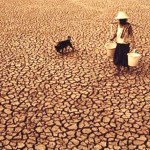
Anthropogenic climate change impacts everyone, but its impacts will detrimentally affect people differently depending upon socioeconomic status. This infographic shows the relationship between climate and poverty and how those most marginalized are the most threatened by climate change.
Fertility and Education
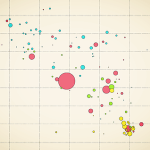
Here is an interesting glance at the correlation between fertility rates and primary completion rates over time around the world. Using Gapminder, we can see the relationship change over 40 years. Continents are coded by color and population is shown by the size of bubble on the chart. Click on the image to the left to visit the infographic at gapminder.com and click on ‘read’ to read my reaction.
The Panamanian Miracle
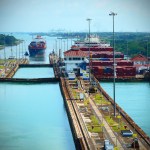
Not only has the economy of Panama flourished recently, but this in turn has had positive effects its economy, raising GDP. Some would call this positive turn-around an economic “miracle” and have likened it to the phenomenon of the “East Asian Tigers.” Unlike its Latin American neighbors, Panama’s economy has predominantly been based on services rather than manufacturing, agriculture, and extractive activities. Panama’s biggest blessing is its geography and location. Situated on the thinnest segment of land between North and South American, the isthmus became an international crossroad through the creation of the Panama Canal. Since the transfer of ownership of the canal from the U.S. as a militarized zone to Panama, the country’s economy has blossomed, yet still has not come without consequences as the country still suffers from high levels of inequality and 40% of Panamanians still live in poverty.
Legacies of Colonialism in Post-Colonial Botswana and Nigeria
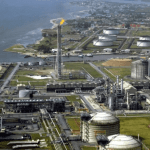
Through trial and error, some nations have achieved domestic tranquility and a mutually beneficial relationship between the state and its people while other states have endured continuous conflict economic instability. Through colonization, the borders of African countries were arbitrarily drawn by European colonizers. These borders and the ways in which colonial rule was imposed over different countries has yielded different results. There is a common belief that countries formerly ruled by Great Britain have fared well in comparison to countries colonized by other European nations, but this is nothing short of a misconception. Botswana and Nigeria are both African nations who endured colonial rule under Great Britain, yet each country’s development has been catapulted onto vastly different trajectories due to the different legacies of colonialism during the times of colonialism and their residual effects post-colonialism.
The Global Benefits of Creating Greenspace
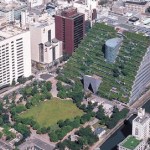
Evidence from researchers across the globe outline why and how greenspace is imperative to the future of humankind. This research paper will examine specific technologies in detail and how they can be applied today. The future of communities in the developed world will be centered on green sustainable living. This green zero emission trend of communal living will pave prosperity for future generations. Having a clean environment produces a functioning community that fosters intellectual growth, which is vital to solving internal and external cross-communal issues. The aim for this research paper is to bring forward ideas that will change the world for the better. By pursuing avenues that benefit the environment around us; humankind ultimately benefits as well. There is no denying that our environments play a direct role in our lives. From the poorest regions of the Earth to the wealthiest ones, one underlying difference prevails; Infrastructure. Undoubtedly, the science behind our social relationships is directly affected by elements in our environment. Thus, the benefits of creating greenspace are not only environmentally appealing but psychologically and socially as well.
City of Mega Events
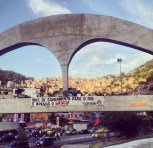 Violence, police brutality, inequality, and forced evictions. These words evoke images that aren’t typically conjured when one thinks of a mega sporting event, such as the Olympics or the World Cup. Unfortunately, the reality is that the hosting of the World Cup and Olympics have exacerbated stark inequalities that have marred Brazil and amplified concerns of police brutality and human rights abuses in the development of these games. To illustrate the issues of human rights and forced evictions, in an effort by the Brazilian government to ‘pacify’ favelas, I created a map that highlights some of the detrimental impacts of the development of the World Cup and Olympics. As someone who lived in Rio de Janeiro during the two years leading up to the World Cup, I drew on some of my own personal experiences combined with my research.
Movement
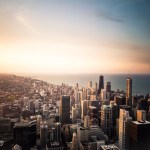
I have learned about how insignificant decisions that I make as a consumer have a measurable effect on people around the world. Developed nations grow in wealth, population, and technology, which requires more resources to sustain. Thanks to globalization, these developed markets take advantage of cheap resources in developing nations. The effects are costly to those nations, their citizens, and the environment. There is no easy solution for these problems, but the first step is awareness.
 Jennifer Kim