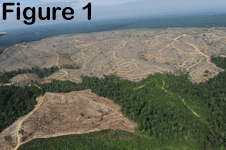
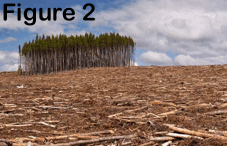
The future of humanity depends entirely on the quality of our environments. Historically, humankind has pursued different forms of shelters across the regions and created complex civilizations that have fostered the current paradigms we live under. From bustling metropolises to quiet towns, the world is clearly in an informational age where our collective knowledge of the environment has never been greater. Ergo with great knowledge comes great responsibility. Factual evidence exists that depicts the gravity of deforestation on the global climate, and the overall loss of greenspace is occurring at ever increasing rates as seen in figures 1 and 2. This environmental stress takes a toll on humanity’s ability to progress forward on all levels. It is imperative that we construct environments and shelters designed specifically to create greenspace. Technologies exist that are applicable to their respective environments that can essentially render an individual’s ecological footprint to zero. This concept of zero emissions or “smart-living” is fundamental to the future of shelter and construction for people everywhere. The focus in this research paper is to demonstrate how greenspace can be created on an individual scale in order to help facilitate a largescale vision of how having eco-friendly environments ultimately will have the most amount of benefits for the planet.
The state of our environments are constantly changing, these changes are both natural and unnatural; in the sense that humankind is directly causing largescale changes to the environments around the globe. The art of greening cities is quickly gaining traction as newfound methods of developing infrastructure hold up to the challenge. Unfortunately, the use of unsustainable grey infrastructure is also expanding at counterproductive rates. A number of studies performed by qualified scientists and engineers suggest that humankind ought to create infrastructure that works with nature and that mimics the natural functioning of ecosystems. Gina Tsarouhas explains in her work Green Walls Green Roofs: Designing Sustainable Architecture that the answer to environmental prosperity is through “…the implementation of community roof gardens, urban farming, guerilla landscaping, living walls, green roofs, street canopy planting, swales, rain gardens, water harvesting, water filtration and recycling (Tsarouhas).” With over 640 million children in the developing world living without adequate shelter, it remains a collective task for individuals and governments to address and implement these technologies. Conventional western wisdom has it that homes should be built from wood, but given the state of the environment and rapid rates of unsustainable deforestation, more ecologically friendly construction methods must exist in order to combat this situation.
In the 150th anniversary paper for the American Society of Civil Engineers, Fiber-Reinforced Polymer offers an expansive solution that achieves “…impressive gains in the safety, economy, and functionality of structures (Bank P. 72).” Essentially, FRP can help improve the health and standards of living for individuals and ecosystems alike. This discovery will have significant applications commercially and residentially. The ability to combine high-strength and high-stiffness fibers with lightweight polymers was streamlined following the aftermath of WWII. This resulted in a composite material with enormous durability, structural soundness and a high level of environmental resistance; Fiber-Reinforced Polymer. The American Society of Civil Engineers contends that “As the cost of FRP materials continues to decrease and the need for aggressive infrastructure renewal becomes increasingly evident in the developed world…” that the “…pressure has mounted for the use of these new materials to meet higher public expectations in terms of infrastructure functionality (Bank P. 73).” As you look around your immediate environment it is evident that it is not common for the general public to build a house out of non-conventional materials. The lack of structural knowledge invokes a sense of misunderstanding coupled with the fear of governmental disapproval, only by ambition and example can this phenomenon change.
American companies like TempleStone have already started implementing Fiber-Reinforced Polymer into new residential homes that use the Earth’s natural heat retaining properties as seen in figures 3, 4 and 5. Although Gina Tsarouhas argues that the concepts of green roofs are not new and have existed in ancient Rome and Persia, they are only now becoming more widespread as countries begin to understand their ecological footprint. Many cities around the world are subject to higher temperatures because of their unnatural architecture (the Urban Heat Island Effect). The art of creating greenspace inevitably curbs:
“…the Urban Heat Island Effect; improving water and air quality; mitigating noise pollution; improving building energy efficiency; providing more green amenity spaces for urban density projects; providing habitat for flora and fauna; growing food on urban roof-top farms and improving our general well being, health and social fabric (Tsarouhas P.7).”
The concept of multiplying the amount of plants will have a direct impact on the sustainability of our environments. The use of FRP composites for construction will greatly aid in the creation of greenspace where other materials have failed.
In the book Climate Change Modeling, Mitigation and Adaptation a number of experts examine the environment from three fundamental standpoints: basic science and vulnerability assessment; modeling and prediction; and reducing or adapting to the negative impacts on humankind and the ecosystem. Every day the connection between the economic developments of a country to the increase of greenhouse gases is growing. If we are right about climate change, then major consequences follow such as the loss of biodiversity and increased environmental pressure and the loss of species. The lack of greenspace in the 21st century is so widespread that it renders all countries as “developing nations”, paramount to the longevity of the environment, governments must aim to rework their urban plans to facilitate the creation of living architecture or “vegitecture”. The process of mitigating and adapting to climate change is subject to a time lag because of the size of our atmosphere, making it imperative that humankind’s efforts increase collectively as soon as possible.
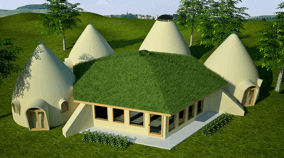
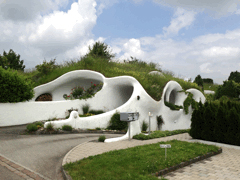
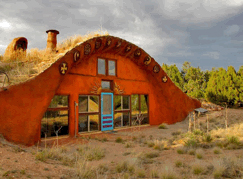
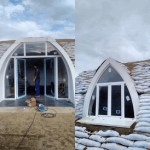
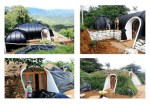
The world renowned civil engineer, Nader Khalili, explains in his work “Ceramic Houses & Earth Architecture” that everyone should be given the knowledge to build with the earth beneath their feet. Essentially, his work is intended for those who cannot afford any sort of building materials but the earth beneath their feet. He explains that by understanding the natural elements: Earth, Water, Air and Fire, one can create a dwelling of any size and that is more structurally sound than conventional wooden homes (see figure 7). Nader Khalili introduces the concept of using his patented technology of Super Adobe (Earth-Bags) to create spaces that are naturally insulated. Though he does not discuss the concept of greenspace, the technique of Earth-Bag building is highly applicable to the concept of sustainability on all fronts (see figures 6 and 8). Fundamentally, combining FRP with Earth-Bag techniques produces incredible feats of “vegitecture” as seen in figures 9 and 10.
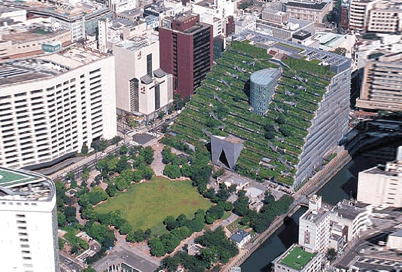
Many people assume that green roofs are not worth the expense, where in fact they are. Kate Galbraith in her article for the New York Times brings up the issue of cost with regards to implementing green roofs in New York City. According to Carter Strickland (a senior policy advisor for New York’s long-range planning and sustainability office) green roofs are too costly to implement (Galbraith). The question we should be asking is; why stop at the roof? The bustling metropolis can certainly benefit from greening the entire building to help with combatting the Urban Heat Island Effect. It is evident that current governmental framework in New York is antithetical to the creation of greenspace. Only by dreaming bigger can we change the trend towards facilitating a completely new paradigm of architecture and construction. In the Japanese city of Fukuoka, the 14 story ACROS building is unlike anything else in the city (see figure 11). When it was first completed it had about 5,000 thriving plants but now:
“We spotted buzzing bees, flora of all kinds and crystal clear waterfalls as we walked up ACROS’s stepped facade… According to the informational sign (translated by my mom), even more species came to thrive on the green roof as they were introduced by visiting birds, and now there are 120 varieties and 50,000 plants. We saw quite a few ginormous (by U.S. standards) black crows hanging out on tree branches and splashing about in the waterfalls and ponds (Yoneda).”
Humankind has to acknowledge the unsustainability of grey architecture and come to terms with the morally justified aesthetic values of vegitecture. In the book Green Roofs And Living Walls For Architects the numerous benefits of vegitecture are discussed in detail. The dynamics of greenspace cater to all sorts of individuals. The social benefits alone provide motivation to anthropocentric minded individuals, whereas non-anthropocentric thinkers will find their motivation through the congruency that this style of architecture has to the natural environment. “The issue of the sustainability of construction is important not only at the design stage for new buildings, but also for the strengthening of existing structures (Derkowski P. 371).” FRP is naturally resistant to corrosion and outperforms steel in many ways, it is evident that combining this technology with the concept of creating greenspace is vital to the future of not just humankind, but to ecosystems as well.
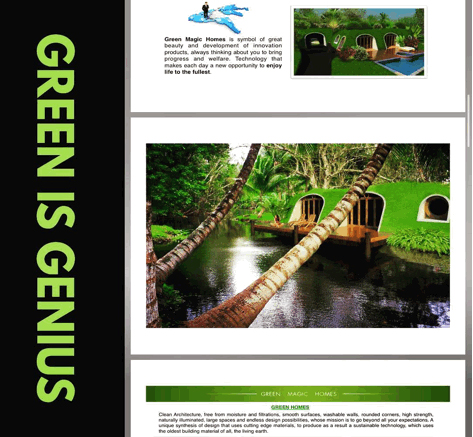
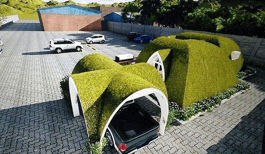
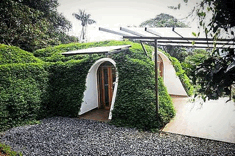
Fiber-Reinforced Polymer is a new-age material that is being used by companies to create green canopied/earth sheltered homes. A company known as Green Magic Homes specializes in manufacturing FRP modular building systems that can be used in conjunction with Super Adobe to create greenspace. Recent innovations like these shed light on what is architecturally achievable.
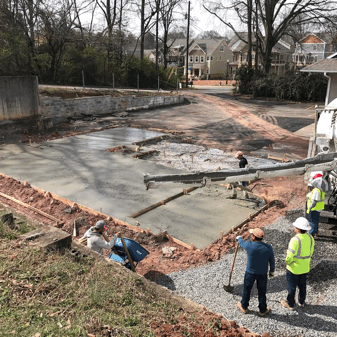
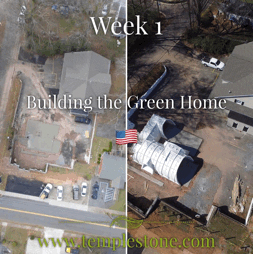
It is imperative that humankind understands that the creation of greenspace promotes utility on all fronts; essentially the only negative aspect would be the original destruction of the construction site as seen in figure 13. Not only do humans benefit from greenspace but flora and fauna are also able to thrive in unison with these proposed structures. The longevity of FRP makes it indestructible to decay and it can be produced out of recyclable materials. Green Magic Homes LLC. has brought FRP to the masses by creating a modular building system that can be designed from the ground up and shipped to anywhere around the world for a mere 42 dollars per square foot. The potential to create beautiful homes and concepts are immense, why should we have to destroy greenspace in order to build? Regardless of the condition of the land, FRP makes it possible to place greenspace virtually anywhere. In order to visualize this concept being implemented into reality on a largescale, it is necessary to engage the problem in reverse, starting with how the individual can create greenspace using FRP (see figure 14). Following this approach the effects and benefits of greenspace will eventually be felt on a larger environmental and societal level.
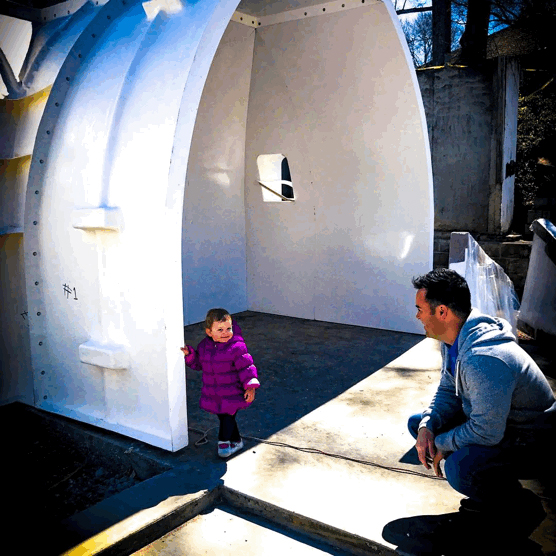
Greenspace provides usable space that wouldn’t normally be available to the individual. A wide array of benefits, ranging from improved structural functionality to psychological and sociological well-being come to life through the implementation of greenspace. The use of FRP to create green roofs provides gardening space and helps to facilitate numerous social benefits as seen in figure 15.
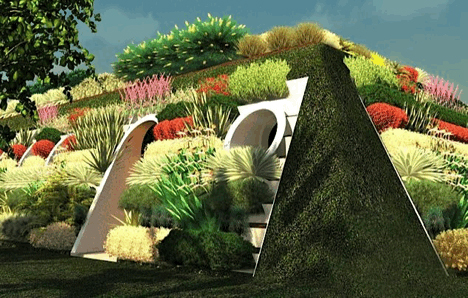
Stemming outward, the public benefits include: Reducing urban heat island effect, air pollution reduction, storm-water management and improved water quality, improved public health and well-being, urban agriculture opportunities, integration with landscape, biomass and biodiversity, reclaiming urban wastelands, adapting to climate change, contribution to aesthetics and urban design (ISDM P. 15). In other words, Using FRP and Super Adobe to create greenspace increases the efficiency of the building. The earth that covers the structure provides insulation that lowers heating and cooling costs significantly and helps to maintain the stability of the temperature throughout the year. This natural heating and cooling effect also creates a micro-climate that surrounds the structure and can significantly improve the performance of solar panels by at least 15 percent as seen in figures 16 and 17 (Green).
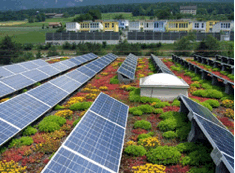
This boost in photovoltaic panel performance is directly linked to the cooler micro-climate created by having vegetation on the roof. Another important aspect that could potentially have huge effects is how green roofs and green walls reduce noise pollution. In urban environments noise pollution can become extremely stressful to the individual. To put it another way, this natural system can aid in dampening noises if it were to be implemented on a large scale in an urban environment. As the planet progress towards sustainability we will see these ideas emerge into the mainstream. The immense social, economic and environmental benefits will allow these structures to flourish globally over time.
In this section we will discuss the numerous social and psychological benefits of greenspace ranging from improved communal cohesion to increased human performance. Being outdoors in the natural environment has been proven to improve people’s overall mental health. Both concentration and memory are improved when in the presence of greenspace, studies have shown that memory and attention span increase by a whopping 20 percent (Life Sciences, Agriculture). Many educational events are held in parks and botanical gardens, therefore the more amount of greenspace there is, the easier it will be to facilitate environmental awareness (see figure 18). The goal of greenspace is not only to reduce pollution and energy costs but also to raise humanity’s appreciation of the environment. The more conducive an environment is to social congregation the more easily cultures can exchange ideas.
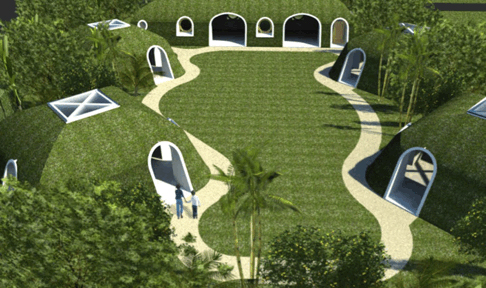
Increasing the biodiversity of plants can directly impact the environmental education of the youth and encourage the exchange of ideas. Imagine having a neighborhood with numerous amounts of plants insulating homes made from FRP and Super Adobe; the awareness of plants will increase and leave a positive imprint on people’s memory. Certain types of plants and flowers have impacts on healing and happiness, for instance, flowers have been shown to positively affect people’s mood and can reduce the likelihood of stress-related depression (Life Sciences, Agriculture).
Nature’s aesthetic qualities are tough to recreate, but with the technology of FRP and Super Adobe we can implement these qualities anywhere and alter them to specifically generate certain effects. Greenspace has been shown to instigate physical activity which would help combat high rates of obesity. In countries like America, encouraging physical activity is a fundamental solution to aiding the prosperity of both the youth and adults. Being physically capable directly correlates to the overall enjoyment of one’s life allowing for a wider array of experiences. Exposure to plants has been documented to accelerate the healing process, where recovering patients who interact with plants experience a significantly reduced recovery time after medical procedures (Life Sciences, Agriculture). A study performed by the National Center of Biotechnology Information concluded that plants significantly enhance health outcomes of patients recovering from surgery (Mattson and Park). If the idea is to “live” in a home, why not build one that helps increase vitality?
The properties of greenspace as seen in this Green Magic Home (see figure 19) are favorable for increasing the likelihood of gardening; which has many therapeutic effects. “Gardening can act as therapy for people who have undergone trauma. The act of nurturing something is a way for people to work through the issues surrounding traumatic events and improve their mental health (Life Sciences, Agriculture).” The U.S. alone “…spends more than 90% of their time indoors, leading an extremely sedentary, disconnected, unhealthy, and unnatural lifestyle (Sorin).” Any form of architecture that promotes a better physical and psychological state ought to be implemented immediately by those who are knowledgeable and capable of doing so. Another implication of the effects plants have on people is in how they can increase compassion and the quality of social relationships. “Studies have shown that people who spend more time around plants are much more likely to try and help others, and often have more advanced social relationships (Life Sciences, Agriculture)” People that care for nature are more likely to express higher levels of compassion towards others.
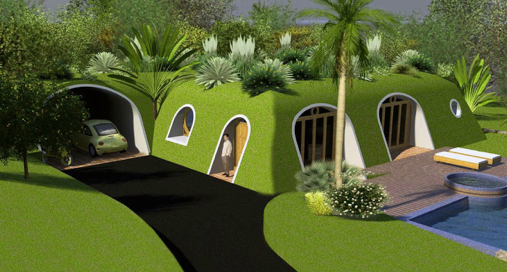
The creation of greenspace coupled with educational initiatives designed to inform the general population about its benefits will yield tremendously positive results for the future of humanity. Essentially, expanding the amount of greenspace in the world will increase human performance at work and at home. Although many will disagree with the assertion that greenspace can cure children with Attention Deficit Disorders, it can at least improve the overall learning process. Clearly the state of urban areas around the world are largely devoid of greenspace. Living amongst structures that function in harmony with the natural environment can help facilitate a natural gravitation towards holistic medicine. Numerous medicines are naturally found in plants, thus increasing the prevalence of plants will draw people towards less dangerous forms of medication.
The association of a higher quality of life with beautifully landscaped areas is important to sustaining interest and economic growth in a community (FedCenter – Sustainability). The lightweight of FRP and the flexibility of Super Adobe allow for construction to take place at a much faster rate. Large projects could be complete in a matter of months as opposed to traditional reinforced concrete and galvanized steel methods of construction that take years. In cramped and polluted cities there are issues of overall air safety, and for anyone to not understand the importance of implementing countering measures as soon as possible is absurd. Most governments will lack in their fiscal dedication towards creating greenspace and the majority of populations are economically paralyzed to the point of pigheadedness to even realize the value behind what is achievable through vegitecture. For smog swollen cities (see figures 20 and 21) it is imperative to implement a green approach to housing and in most areas it would require considerable amounts of money and governmental cooperation. We will now look at Mumbai, India and analyze the environmental state of the city and how it can benefit from implementing greenspace.
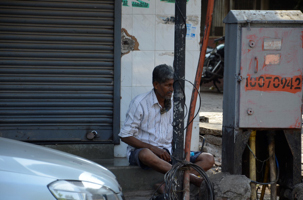
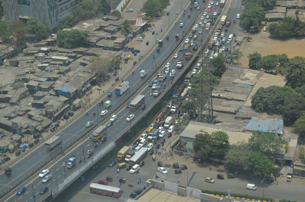
Mumbai is a prime example of a city in the 21st century that is on route to ever-growing environmental consequences. The air quality is devastating and has led to the deaths of millions of citizens. It remains a concrete metropolis with no savior. The large population dynamic and income disparity makes it a good example of social pandemonium and this reflects directly on an individual’s environmental behavior and choices. According to the World Health Organization, Mumbai is the 5th most polluted megacity in the world. “The concentration” of air pollution in Mumbai “was 63gm3 which is over six times WHO’s safety limit of 10gm3 (Borwankar).” The busy metropolis is surrounded by slums, many of which have little to no access to a garbage collection service. This results in massive amounts of trash being piled up and set on fire. The burning of garbage contributes to the horrible air quality and is directly related to the lack of infrastructure. In order to visualize the need for sanctifying greenspace in Mumbai take a look at the state of this urban area seen in figure 22.
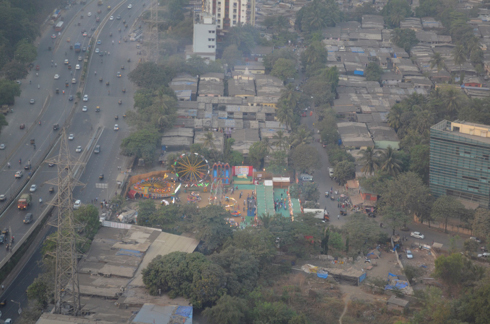
You can clearly see how slums line the city and the air pollution that surrounds them. These slums are notorious for criminal activity and do not create prosperous environments for the youth. It’s almost as if the trees are begging for the implementation of greenspace. The affordability of Super Adobe makes it a prime material for reconstructing the infrastructure in the surrounding slums of Mumbai. FRP can also be used but is likely too expensive to be implemented on such a large scale without governmental aid, as these slums exist in all areas around the city. The “built overnight” look of these dwellings reflect the weakness of these structures. Most of which are subject to collapse and do not hold out natural elements. The reality of the situation requires reconstructing the land from the ground up to better cater to Mumbai’s social and natural environment.
The world is on the cusp of a technological revolution that will give us the ability to correct problems at a much faster rate than ever before. This natural progression of our global economy will lead to a more sustainable and a more encompassing economic model for not just India but China as well (Trevor P. 1). The question is how seamless will the transition to sustainability be? Chinese society has been built around systematic principles geared towards driving up the rate of export industrialization regardless of environmental consequences. The sustainability of China’s current economic model will not be possible as it is today, in the next two decades the world economy will have changed in ways that seem unimaginable to some. The exponential growth of globalization will aid in bringing a more balanced economy not just for China but for the entire planet. India will play a pivotal role in securing China’s development in the future by providing capital for large-scale investments (Robin P. 1). It doesn’t take a genius to realize the power and potential in numbers, India will be a future powerhouse for businesses alongside China. In terms of development, India is behind China in almost every sector, nevertheless huge-scale projects are taking place to eventually bring about a grid system of roads that will make desirable areas of India accessible for development. This wave of development for India and China is primarily driven by the enormity of the populations and the high rate of globalization it causes. The two nations already play key roles in each other’s economic affairs and will continue to do so beyond even the next two decades. The economic model of export industrialization has undoubtedly been the main factor that helped to create the China and the world that we see today. The gap that is separating China from achieving its true potential is technology. Specifically, the technology to educate at a high level in all areas of China. The increase in the standard of education should come as the rural and urban gap closes.
Greenspace improves safety and can be a catalyst towards assisting community cohesion. Even though the communities in these slums seem to function cohesively, the stress from the urban environment can be felt and is an underlying reason for the poor quality of life experienced over there. The noise dampening effect of green roofs would help keep down the city’s cacophony of stressful sounds. It is impossible to expect the lower class to function normally and pursue higher forms of education when the state of their environment is in utter pandemonium. The amount of traffic related deaths in Mumbai is alarming and by beautifying the city with vegitecture it will be possible to increase traffic safety whilst reducing all forms of pollution. Studies show that adding greenery to “…road ways can have the dual effect of increasing driver satisfaction (Life Sciences, Agriculture).” and can help create boundaries to reduce accidents. Ideally, in order for Mumbai to be the subject of greenspace on a largescale it would need to experience the “Upgrade Effect”, which entails societal encouragement that multiplies the creation of greenspace. “As parts of the community begin to improve their urban greenspaces, other areas will be forced to stay competitive and beautify their areas as well. The Upgrade Effect benefits the entire community, as neighborhoods and businesses encourage each other to landscape and beautify the community (Life Sciences, Agriculture).” To expedite this effect there would need to be adequate governmental support and planning through joint operations. Many citizens of Mumbai simply do not have the knowledge or the means to procure any materials other than what surrounds their immediate vicinity.
Although all human beings require clean environments to prosper, some of them will probably dispute the claim that the creation of greenspace through FRP and Super Adobe is feasible globally. It is hard to visualize the planet merely by consuming media and this might lead some to believe that the scope of this project is too large to be considered feasible. The lack of necessary infrastructure means that there are areas that still do not have access to flowing water or power. It’s time that we turn to more sustainable models for generating power. Recent break throughs point towards using gravity to generate light in remote locations (Vegabond). One thing is definite, a considerable amount of effort will be required from everyone to achieve global results. Humankind is so diverse in their views and cultures that it is hard to generalize about them, there will certainly be objections to new forms of architecture on the grounds that it might contradict certain people’s lifestyles. “Impossible” some would say, “You must be reading the research selectively to suggest that these two construction techniques will produce cleaner environments globally.” “How can you assume people would want to live like this? It is clearly a subjective lifestyle that you are implying by your research.” Many will believe that the evidence cited in this research paper does not address a global solution, rightfully, a global solution needs effort from everyone on the planet and should address every detail. Many people will contend that the complexities of what constitutes prosperity in an environment have been ignored, and that every environment requires different forms of understanding. Thus, the proposed use of FRP and Super Adobe structures cannot account for every situation. Readers may challenge this view by insisting that these construction techniques are not all that is required to produce prosperous environments. Psychologists, of course, may want to question whether or not the creation of greenspace will actually improve human performance. One thing is certain; the enormous geographical diversity that exists on Earth and all of its respective environmental properties requires gigantic amounts of information to understand entirely.
The denial of FRP and Super Adobe as viable means to create cleaner infrastructure cannot be well supported. The sheer number of projects that have been completed using these two materials address any objection. That is not to mention ongoing projects or future ones. By portraying ways that greenspace has already been created and showing the potential of these two materials as viable means to create greenspace on a large scale, it is possible to convince any reader of its global applications. If people object to greenspace because it is antithetical to their current lifestyle, it can be deduced that their current lifestyle is not sustainable or healthy. Due to the recyclable nature of these materials and the positive elements that greenspace incorporates it cannot follow that the implementation of these concepts will produce anything other than a superior (sustainable) lifestyle. This form of living is much more sustainable than others i.e. using steel or wood. If a reader still cannot visualize the implementation of greenspace globally via these two principle methods of construction, than it would have to be addressed in a more elaborate fashion, with specifically designed large scale projects beyond the scope of this research paper. It is clear that this paper does not explore the complexities of every environment. The parameters of this paper are not meant to address every detail of every environment. Rather, what readers should take away from this, is how these largely unknown construction techniques can be used to create usable space and reduce one’s ecological footprint and allow one to live in harmony with nature. FRP and Super Adobe are the most promising materials that exist today that are capable of changing the environment for the better when used to create greenspace. FRP and Super Adobe are undeniably some of the best ways we can design greenspace.
Even in “first world” countries the lack of concern and strategy for the future of humanity and our environments are equally alarming. Is it not important that we better prepare ourselves for the future of our environments? The beginning of creating greenspace is among us in the 21st century and it is the duty of every capable individual to understand the dynamics of this form of architecture. Only through individual understanding can we expect to see largescale societal changes that will lead to an overall better quality of life for everyone. Citizens in poor cities lack the knowledge to transform their environment and will need the direction of key leaders. With seemingly trillions of dollars floating into useless industries like the military, it is time that the human race takes a good look at itself and the state of the world’s environments. The notion that greenspace cannot be achieved on a largescale in our lifetime needs to be forgotten and replaced by a new focus. A focus designed around sustainability, especially in areas that suffer from intense amounts of pollution and social chaos. Humanity cannot pursue its current ecological footprint and expect the environment not to retaliate. Increasing biodiversity is a fundamental goal that will carry over to the next century. The devastation caused by urban areas on the environment are enormous and are largely immeasurable in terms of accuracy. After reading this paper you should now understand more about the technologies available to us and begin to dream of what is environmentally possible by creating greenspace.
Works Cited
Bank, Lawrence C. “Fiber-Reinforced Polymer Composites for Construction—State-of-the-Art Review.” ASCE Database. N.p., n.d. Journal. 17 Jan. 2017.
Derkowski, Wit. “Opportunities and risks arising from the properties of FRP materials used for structural strengthening” ASCE Database. N.p., n.d. Journal. 17 Jan. 2017.
“Climate Change Modeling, Mitigation, and Adaptation.” Climate Change Modeling, Mitigation, and Adaptation | ASCE. N.p., n.d. Print. 18 Jan. 2017.
“FedCenter – Sustainability.” FedCenter.gov. N.p., n.d. Web. 5 Mar. 2017. <https://www.fedcenter.gov/programs/sustainability/>.
Galbraith, Kate. “Green Roofs: Are They Worth the Expense?” The New York Times. N.p., 19 May 2009. Web. 17 Jan. 2017.
Green, Dino. “Green Roofs Boost Photovoltaic Panels.” Triple Pundit: People, Planet, Profit. N.p., 07 Feb. 2015. Web. 5 Mar. 2017. <http://www.triplepundit.com/2013/03/green-roofs-boost-photovoltaic-panels/>.
Khalili, Nader. “California Institute of Earth Architecture.” CalEarth. N.p., n.d. Print. 18 Jan. 2017.
ISDM. Green Roofs And Living Walls For Architects. N.p.: ISDM, n.d. Print.
Tsarouhas, Gina. Green Walls Green Roofs: Designing Sustainable Architecture. Mulgrave, Victoria, Australia: Images, 2014. Print.
Borwankar, Vinamrata. “Mumbai Is the Fifth Most Polluted Megacity in the World, Says WHO – Times of India.” The Times of India. City, 13 May 2016. Web. 6 Feb. 2017.
Mattson, RH, and SH Park. “Ornamental Indoor Plants in Hospital Rooms Enhanced Health Outcomes of Patients Recovering from Surgery.” Journal of Alternative and Complementary Medicine (New York, N.Y.). U.S. National Library of Medicine, n.d. Web. 5 Mar. 2017. <https://www.ncbi.nlm.nih.gov/pubmed/19715461>.
Life Sciences, Agriculture. “Health and Well-Being Benefits of Plants.” Ellison Chair in International Floriculture. Texas A&M, n.d. Web. 06 Feb. 2017. <http://ellisonchair.tamu.edu/health-and-well-being-benefits-of-plants/#.WJqL31UrKUk>.
Sorin, Fran. “13 Reasons Why Gardening Is Good For Your Health.” Gardening Gone Wild. N.p., 03 Sept. 2016. Web. 5 Mar. 2017. <http://gardeninggonewild.com/?p=27941>.
Yoneda, Yuka. “PHOTOS: Japan’s ACROS Building Is a Mountainous Green-Roofed Pyramid Planted With Trees.” Inhabitat Green Design Innovation Architecture Green Building. Inhabitat, 07 June 2011. Web. 06 Mar. 2017. <http://inhabitat.com/photos-acros-japan-is-a-mountainous-green-roofed-pyramid-planted-with-trees/>.
Andrews, Robin. “China Breaks Ground On Self-Sustaining ‘Forest City’ That Eats Pollution.” IFLScience. IFLScience, 09 July 2017. Web. 13 July 2017.
Khorammi, Mohammad, Rouzbeh Shad, and Marjan Ghaemi. “Developing an Iranian Green Building Assessment Tool Using Decision Making Methods and Geographical Information System: Case Study in Mashhad City.” Developing an Iranian Green Building Assessment Tool Using Decision Making Methods and Geographical Information System: Case Study in Mashhad City – ScienceDirect. ScienceDirect, Jan. 2017. Web. 13 July 2017.
Nace, Trevor. “China’s New ‘Forest City’ Will Make You Rethink Urban Cities.” Forbes. Forbes Magazine, 30 June 2017. Web. 13 July 2017.
Sun, Zhi Xin. “Green Building Index System Based on Detailed Low-Carbon Ecological Planning.” World Construction. NanTong Institute of Technology, 2017. Web. 13 July 2017.
TOP TRUTHS. “Most Eco-Friendly Cities in the World (Part 1).” YouTube. YouTube, 29 Nov. 2016. Web. 13 July 2017. https://www.youtube.com/watch?v=T5o7RdlP4FY
ChinaIcons CI. “China’s Green Roof Revolution | A China Icons Video.” YouTube. YouTube, 12 May 2016. Web. 13 July 2017. <https://www.youtube.com/watch?v=N8L1hDWACKQ>.
Scientific Vegabond. “Gravity Light – No Pollution and Free of Cost.” YouTube. YouTube, 07 July 2017. Web. 13 July 2017. <https://www.youtube.com/watch?v=9y8zJrsKMXs>.
Plantebv. “Plant-e: Living Plants Generate Electricity.” YouTube. YouTube, 29 July 2011. Web. 13 July 2017. <https://www.youtube.com/watch?v=Ku1-_MOzkTE>.
Destinws2. “Turning Gravity Into Light – Smarter Every Day 146.” YouTube. YouTube, 08 Dec. 2015. Web. 12 July 2017. <https://www.youtube.com/watch?v=Jsc-pQIMxt8>.
 Jennifer Kim