Blog

Anima.

According to Carl Jung, the Anima and the Animus are two dueling concepts that are part of Jung’s theory of the collective unconscious. The Anima is the essence of a man’s personality (his female spirit), while the Animus is the complementary male spirit that resides and acts within a woman’s psyche. The Anima and the animus are spontaneously produced by the unconscious and are archetypes common to all people. A woman or man usually only expresses his/her dormant qualities unconsciously by projecting them onto men or woman they meet.

This idea, that personhood consists of the male and female spirit, is certainly heterosexually binary now, but there are elements of it that I think apply quite obviously to Anima, which falls somewhere between a dream and a nightmare, with moments of deep bleakness and heart-swelling love.

When Anima begins, a group of people, all dressed in the same shades of grey and blue mercantile outfits that seem suitable for factory workers, in unison in a train car. Their heads move side to side, rested upon hands and forearms, as if they are all fighting off sleep. No one makes eye contact with each other. Everyone is struggling to stay asleep or to wake up; only Yorke seems to have any semblance of self-awareness. “Who are these people?” he wonders in the lyrics of “Not the News,” but he does notice a woman, who is sitting in another part of the train car. When she leaves her black metal lunchbox in the train, he struggles to break against the monotonous movements forced upon him to get to her, weaving around bodies on an escalator and trying to walk through the turnstile.

Finally, Yorke takes the turnstile at a running leap, flying over it and gliding forward into a series of caves, structures of rock and sand, all in strict contrast to the utilitarian natures of the workers that move among them. Yorke is an individual in a sea of otherness, and as he flails forward and struggles to find the woman from the train, others pursue him with bad intentions.

He can still see the lunchbox, and he can still see the woman, but he still can’t entirely make his body do what he wants. As he strides past other workers, they fall like dominos. They collapse as he moves uphill until he too is trapped in what seems like a whirlwind, surrounded by whirling bodies, all of them encircled by a tornado of trash. Newspapers. Plastic bags. Coffee cups. The only thing for Yorke to do is submit, to let the minutia of life envelop him, and this moment is one of the film’s most beautiful; the idea that sometimes survival is tied to letting go.

This was a central theme in Anima that has really stuck with me: that sometimes survival is tied to letting go, and then when you do acquiesce, you become fully in charge. The moment Yorke does acquiesce is the moment he becomes in charge of himself fully, waking up now face-down in a city street. He gets up and brushes the trash off. He finds the woman from the train, and they dance.

Then because of that ethereal dance with the woman still sitting opposite him, he has something to hold on to, something to remember, and even something to wake up for.

These final minutes are quite beautiful, and take us into a dream space. Up against a wall covered in graffiti, Yorke and the woman push and pull against each other, rushing into the street, jumping onto each other’s bodies, first in a twirl and then in a dance. Their attachment to each other attracts others, now also broken out of their regimented rhythm; they too embrace each other, dance in a grassy field, and couple into pairs. Each of these pairs is shot from below to see their grasping hands and from above to see their faces aligned with each other, these individuals choosing to seek each other out – filling the void that Jung had described all those years ago.

Another train appears, punctuated with windows and filled with light, and this time Yorke and the woman board it together. They sit across from each other, their fingers once clasped. And as we hear birds singing and see the shadows of leaves upon Yorke’s face, he falls asleep once more.

And the question we’re left after Anima concludes is where that train will go. Does it return to that same dark and dank tunnel where the film began? Will Yorke and the woman and all the other people on the train do this all over again, or will they remember what they’ve already done, the bonds they’ve already created? Has this already happened? The idea that to work and to live is a tedious, sometimes soulless endeavor isn’t a particularly unique one, and has been explored by countless others already.

But the little glimmer of hope in Anima is what sets it apart, and together with Paul Thomas Anderson and Darius Khondji, Yorke has crafted a short film that draws its power from both unsettling and invigorating us.

Through it all, I thought, most surprisingly, of Forky from Toy Story 4, of the suggestion that to truly know yourself is to accept that we are all inherently trash in the universe, but that it is our individual choice to attempt to become more, to do more, to mean more. It’s an eternal question. Can we be more than we were originally built for? And it is one that Anima considers with moments both uncanny and beautiful.


Obstacles

14925711_10154752331288514_6126570913064087680_n

Perhaps a person gains by accumulating obstacles. The more obstacles set up to prevent happiness from appearing, the greater the shock with it does appear, just as the rebound of a spring will be all the more powerful the greater the pressure that has been exerted to compress it. Care must be taken, however, to select large obstacles, for only those of sufficient scope and scale have the capacity to lift us out of context and force life to appear in an entirely new and unexpected light.

For example, should you litter the floor and tabletops of your room with small objects, they constitute little more than a nuisance, an inconvenient clutter that frustrates you and leaves you irritable: the petty is mean. Cursing, you step around the objects, pick them up, knock them aside. Should you, on the other hand, encounter in your room a nine-thousand-pound granite boulder, the surprise it evokes, the extreme steps that must be taken to deal with it, compel you to see with new eyes.

And if that boulder is more special, if it has been painted or carved in some mysterious way, you may find that it possesses an extraordinary and supernatural presence that enchants you, and in coping with it—as it blocks your path to the bathroom—leaves you feeling extraordinary and supernatural, too. Difficulties illuminate existence, but they must be fresh and of high quality.

Climate Change & Gender

Climate Change & Gender

Simply put, the effects of climate change are worse for women than for men. The impacts of climate change will disproportionately target the world’s poorest nations far more severely than developed countries, and unfortunately, the effects are not gender-neutral.

Climate change will disproportionately impact women’s health and livelihoods because women tend to be overrepresented amongst the global poor, and as a result, have increased exposures to the dangers of climate change. People in poverty are already underserved and have restricted or no access to resources. Climate change causes extreme weather events. These extreme weather events affect women more than men in that more women are more likely to die during extreme weather events, based upon information from the UN that explains poverty, social restrictions, roles in decision-making, and even swimming skills are heavy influences in a woman’s survival. If women are able to survive and make it to an emergency shelter, they are at increased risk of violence.

Continue reading “Climate Change & Gender”

The Idiot Cycle

“I mean really, it’s supposed to be illegal to experiment on people without their permission.” This quote from the documentary, “The Idiot Cycle” reminded me of how just because something is made illegal, doesn’t mean it goes away. It often just continues under another name. Although discrimination is illegal, it still exists in the form of housing discrimination, lending discrimination, education, the criminal justice system, etc. Laws banning unethical human experimentation were set into place to protect people, but it still persists in other ways, and the corporations that are responsible for the pollution and their potential detrimental health effects have so much power that they can ensure no regulations are in place to prevent them from doing business as usual.

We are led to believe that we have control over our own fates. That we choose whether to be healthy or not to be, but this documentary explores how our health is not in our hands. In “Complaints and Disorders” Ehrenreich and English write that “There is no way for us to come to terms with our own bodies, in whatever female ‘subcultures’ we may attempt to create, because, when you come right down to it, our bodies are not the issue. Biology is not the issue. The issue is power, in all ways.” The problem laid out clearly here, and in the Idiot Cycle, is a problem of power and how we transfer that power into our hands. This is just emblematic of the ways in which our Capitalist system is so catered to corporations because of its support of the profit model. This allows important regulations to be dismantled or their entire existence prevented because of the power that corporations have in shaping our laws and influencing our policymakers.

But is ‘oppression’ a useful term in addressing these issues?

Continue reading “The Idiot Cycle”

Input-Output

jenamyprotest

Be honest, be open, be resilient, be brave, value knowledge, be compassionate, and don’t be afraid of taking a nontraditional path. The values that have guided my life are pretty simple, I think. They don’t come from anybody else’s doctrine or religious guidance, but rather are a result of a lot of introspection and emotionally taxing experiences.

I truly believe that knowledge is power (something my mom used to say to me on a daily basis) and that an imbalance in it among all of us is the nucleus of all conflict. I also believe that disappointment is the direct result of unreasonable and/or unmanaged, maybe sometimes even subconscious, expectations.  We are never as smart or as good as we think we are. To that end, my life has been a result of managing and working with these self proclaimed assertions, but also knowing that everything is fleeting and so I should be adaptable to life as it ebbs and flows.

Buried in the first assertion, is truth because to have knowledge of something you have to know a truth. A false, then, is just an abstract. The truth there is knowledge of the false and to admit it exists. Therefore, to live and work with the best and most complete knowledge that I can… I try to live in and focus on what’s true, although this is sometimes a struggle. The rest is “noise” and that drives me to honesty. The conflict that arises from having more knowledge, and by association more truth,  is pretty extreme but limited with a time decay. Eventually, truth is either recognized or leaders edict that it will be ignored and we carry on. Knowing that’s the case… is again, more knowledge and working with it is more power.

Next, is the understanding that one cannot possibly be disappointed if expectations are synced with capability and reality. Capability is merely a function of energy.

Continue reading “Input-Output”

City of Mega Events

I made this map below because I wanted to illustrate the geographical inequality in Rio de Janeiro and the pacification and development of Rio’s favelas in an effort to curb violence and ‘clean up’ the city before the World Cup and Olympics. The changes that have been taking place have been in progress since the first favela pacification happened on December 19, 2008 up until today and not only have environmental impacts, but also social. These changes were initiated after October 30, 2007, which is when the 2014 World Cup was awarded to Brazil.

Continue reading “City of Mega Events”

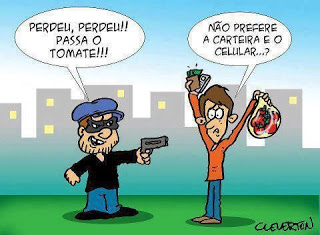
Hand over the Tomatoes

photo

In Rio State, Saint George’s day is much more of a celebration than it is back in English-speaking countries. Here in the city of Rio, Tuesday was a day off work. So, in true Carioca fashion the Monday also becomes a day off; they call it the bridge day. Whether this is the case for all industries across the city, I don’t know, but here in Rocinha there truly was a holiday feel. Waking up to the sound of fireworks (yes, in broad daylight and I still don’t get why), seeing people out on their doorsteps and verandas drinking away, and seeing live music being played in the favela’s main street, Via Apia, it is fair to say that the community here made the most of their holiday and their two days off work.

On a more topical note, I’m now going to discuss a recent occurrence here in Brazil, how it came about, and finally why it raises issues that reminds Brazil of darker days. If you are getting confused, don’t worry… all will be revealed.

Continue reading “Hand over the Tomatoes”

Volunteer Programs are not always what they seem

This post is a little less about me and my time in Brazil and more about a problem I knew existed but has become more apparent to me over the last few days.

I’m sure you’re all aware that I have been working voluntarily as an Assistant Field Coordinator and English teacher for an NGO called The Two Brothers Foundation. They’re a non-profit organization based in Rocinha and are essentially coordinated from the USA by some of the guys that founded the organization a number of years ago.

Anyway, to work as a volunteer here you don’t have to pay. For me, to pay to be a volunteer kind of defeats the objective of being a volunteer and this was one of the main reasons why I opted to work for 2Bros. By all means do some fundraising to support your project but please and I stress PLEASE do not pay an external organization ANY money to put you into a volunteer project unless you have spoken to people who have used that company or have at least read around Internet reviews.

In this post I am going to explain some stories I’ve heard since arriving, as well as tell you the names of some of the organizations that are profiting from people’s good will and hard work.

Continue reading “Volunteer Programs are not always what they seem”

Breaking Down Misconceptions through Art

I truly believe that art can be a catalyst for change, altering the way people see themselves and the world around them, which is why I am so enthusiastic about community/participatory art and activism.” – Beccy McCray

A few months ago I had been contacted by artist and creative producer, Beccy McCray. She expressed great interest in having a workshop at our organization and proposed an art/craft workshop. Her desired objective? To facilitate a positive difference by linking people together through creative means and also to have a good time! She was well-aware that many people have negative preconceived notions about favelas and favela residents (being violent and hubs for drug trafficking), and because of those misconceptions her other target was to use art to to tell truths about favela life and favela residents to dismantle those misconceptions. Continue reading “Breaking Down Misconceptions through Art”

Brazil Rising: A Gringa’s Account

As I’m sure most of you are fully aware, the last week or so in Brazil has been manic. Protests across a number of Brazilian cities have dominated national headlines and attracted the attention of international media as well. In this post I want to talk about my first hand experiences of these recent events, outline as best I can what is going on, and finally discuss the important challenges the movements face going forward into their second week and beyond.

Last Thursday, my friends and I joined 300,000 Brazilians on Rio’s famous Presidente Vargas Street for one of the most monumental and game-changing social movements the country has witnessed since the transition to democracy in the 1980’s. In addition to the musical, party-like, carnival atmosphere, there was something immediately poignant and striking about this particular protest. The range of issues the crowd was protesting about was so broad it was difficult to understand what the intentions and motivations of the crowd actually were.

Rather than focusing on one issue, such as the 20 Centavos bus fare increase, the placards on display and the chants circulating aired grievances that spanned across all the problems Brazil is facing in its strive for a more just, efficient and equal society. Amongst these challenges were:

• Investment into education and healthcare services
• Reducing corruption and increasing transparency
• An overhaul of public transport networks
• Gay rights
• And one that I noticed was pursued with real vigor – the abandonment of the FIFA 2014 World Cup

Continue reading “Brazil Rising: A Gringa’s Account”