Having been only recently crowned an economic jewel, Panama has soared above many other developing nations. Over the past decade, Panama has been able to outpace its neighbors in Latin America and the Caribbean with an average annual GDP growth at 6.9% between 2000 and 2014; some of those years have even achieved double-digit growth (Looney). While GDP growth has declined over the past few years, Panama is still able to maintain steady growth and remains ambitious through the implementation of new plans to increase and sustain economic growth.
Unlike its Latin American neighbors, Panama’s economy has been largely based on services rather than a combination of manufacturing, agriculture and extractive activities (Looney). In 2014, services comprised nearly 80% of Panama’s GDP, with industry and agriculture filling in the rest of the country’s GDP (CIA). The most common goods from the agricultural sector are sugar cane, rice, bananas, coffee, and corn, while the construction has been a key contributor to the industrial sector (CIA). Panama’s most significant services are transport, communications, and storage. Both transport and communications are also among Panama’s fastest growing services, with the others being tourism and wholesale trade (“Economic Overview”).
It’s no hidden fact that Panama’s geography is one of its biggest assets. In addition to the variety of crops grown in Panama and land that is ideal for raising live stock, resources such as limestone, clay, salt, gold, and copper are commonly mined (Looney). Currently, mining only accounts for 1.6% of the total GDP, but some predictions estimate mining could contribute anywhere from 9% to 15% of the GDP (Country Report). In an effort to keep up with the demand for power and decrease the country’s dependence on fossil fuels, plans are underway to expand the country’s significant hydroelectric and thermoelectric potential, but only small strides have been taken (Country Report). Opposition from local communities has challenged the expansion of hydroelectric facilities and have a risk of water shortages due to region’s dry season (Looney). Additionally, the agricultural and mining sectors all have money earmarked to help facilitate their growth.
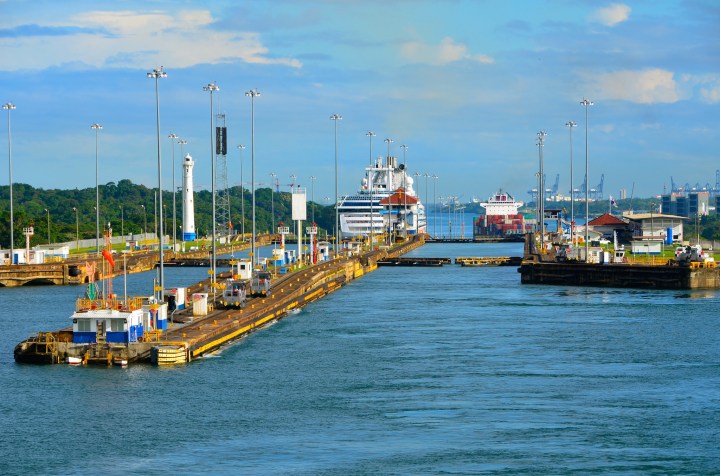
Another key player in panama’s success was also based upon its geographical location. Sitting at the thinnest segment of land between North and South America, the isthmus was an ideal setting for the Panama Canal that would eventually designate as an international cross road. The impacts of the transfer of ownership of the Panama Canal to the Panamanian government in 1999 have bolstered its economic development. Under U.S. control, the Panama Canal was a militarized zone. Once the Canal was in the hands of the Panamanian government, they successfully commercialized the canal zone. Instead of functioning as a public utility, it was “ran as a profit maximizing business” with higher rates charged to shippers than the ones imposed by the U.S. Instead of a military zone, it became a place for tourists and residents to frequent, with shopping malls and other businesses developed. This proved to be instrumental in increasing opportunities for profit and was a considerable contributor to Panama’s rise in GDP (Maryniak). The canal zone is currently under construction to expand its size to accommodate larger ships. The project is expected to be completed sometime in 2016 and is expected to create around 13,000 direct jobs and indirectly creating around 27,000 more (Economic Overview). However, the Panama Canal may soon face competition from its neighbor, Nicaragua, that has rolled out plans to construct its own canal that was developed by a Chinese firm (BBC).
Panama’s growth as a small and open economy, the external trade and finance sectors have been crucial to its growth. Panama has no central bank, and voluntarily adopted the U.S. dollar in 1904 (Country Report). There are critics who argue that it can lead to “competitiveness issues” when the US dollar appreciates because “in order for the country’s goods to remain competitive, inflation in Panama has to match that of the USA (Looney).” Another critic notes that rising prices hurt dollarized countries like Panama because a lack of a central bank, and consequentially, no central bank to “monetize the debt and finance populist deficit spending (Black).” On the contrary, many view the lack of a central bank and dollarized economy as positive because it promotes currency stability and decreases the risk of foreign exchange rates (Looney).
On top of becoming a member of the World Trade Organization, Panama has a free trade agreement with the U.S. that was followed by agreements with the European Union and Mexico. The agreement with Mexico was seen as a step towards membership with the Pacific Alliance, and previously, free trade agreements had already been made with Chile, Colombia, and Peru (Looney). Panama is also home to the second largest free zone in the world, the Colón Free Zone. While the Colón Free Zone has typically contributed to strong export growth, a decline in exports was a result of a decline in exports from the zone (Looney). Moreover, foreign direct investment is welcomed and even sought after by the Panamanian government and there are legal distinctions between foreign and national companies (Santander).
Although Panama’s economic growth has been compared to that of the four tigers, the Latin tiger has yet to match up to the human capital of the four East Asian nations. Despite Panama’s impressive economic growth and has achieved measurable growth, it still falls behind in inequality. With money flowing, not everyone is benefitting and the population still remains divided with nearly 40 percent of its population still living in poverty and of that 40 percent, 19 percent live in extreme poverty (World Bank). Youth unemployment is higher than the overall unemployment rate and housing costs have risen. Roberto Darkins, a Panamanian citizen, contends that housing has become less affordable and points out that it’s hard for small businesses to get microloans (Padgett). Panama has a consumption GINI of 49 and an income GINI of 61, which ranks Panama’s level of inequality as one of the highest in the world. Overall, Panama’s economic development model doesn’t place enough importance on human capital. In order to promote sustainability, Panama needs to raise productivity through investing in education, health care, and other goods and services.
Works Cited
Black, Simon. “The US Dollar is Creating Huge Problems for One Central American Country.” Business Insider. 8 March 2015. Web. 8 Nov. 2015.
“Country Report: Panama.” Panama Country Monitor (2015): 1-15. Business Source Complete. Web. 8 Nov. 2015.
“Economic Overview.” Panama Country Review (2013): 61-62. Business Source Complete. Web. 8 Nov. 2015.
“Foreign Direct Investment in Panama.” Santander Trade Portal. November 2015. Web. 10 Nov. 2015.
“Nicaragua Canal Protest: Thousands Oppose Atlantic-Pacific Plan.” BBC News. 14 June 2015. Web. 9 Nov. 2015
“Panama: Poverty Assessment: Priorities and Strategies for Poverty Reduction.” Poverty Reduction and Equity. World Bank, N.D. Web. 10. Nov. 2015.
“Panama”. The World Factbook. Central Intelligence Agency. 2015. Web. 9 Nov. 2015.
Keeler, Dan. “Meeting Point.” Global Finance 27.5 (2013): 94. Business Source Complete. Web. 8 Nov. 2015.
Looney, Robert E. “Panama: Economy”. Europa World Plus. Routledge. N.D. web. 8 Nov. 2015.
Maryniak, Marcia. “Canal Profitability: Why Panama has been successful when the US couldn’t make it?”. Operations in Panama. NYU. 7 March 2014. Web. 10 Nov. 2015.
 Jennifer Kim