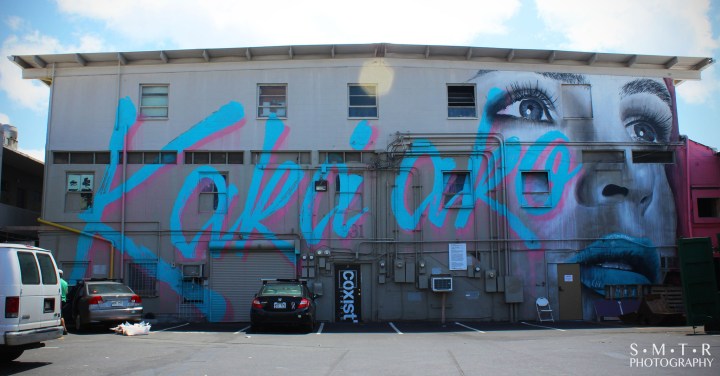
Situated on the Southern shore of Oahu, in the city of Honolulu, Kaka’ako has seen its share of drastic changes. The current face of Kaka’ako is yet another transformation in its history. Kaka’ako was traditionally a site of recreation, agriculture, and also sacrifice (Wu), and was teeming with fishponds and salt ponds (“Our Kaka’ako”) but has continually gone through rebirths over the past century. In its current stage, Kaka’ako has been subject to revitalization with a vision of creating a mixed-income use community where people can live, work, and play all within walking distance of their own high rise buildings. Even as redevelopment has gone underway, it has not been carried out without resistance as conflicts have arisen between communities and developers. As Kaka’ako gets revitalized for mixed-income use, its redevelopment advances economic segregation and will add further strain on the Native Hawaiian population and the working class that has historically called Kaka’ako home.
Culture and History of Kaka’ako
In the 1800s, Kaka’ako became increasingly residential, and still its “salt pans, loko i‘a (fishponds), and lo‘i (taro fields) pervaded the landscape” well into the 1930s (“Our Kaka’ako”). Both the 1920s and 1930s saw Kaka’ako as a mix of residences and businesses, with warehouses mostly outside of Kaka’ako. In the 1940s, businesses began replacing housing and the wealthier residents began relocating, leaving the less affluent residents in Kaka’ako as it came to be known as a poor and crumbling district (Fuji). As parts of its residential area were left alone, Kaka’ako became a working-class multicultural neighborhood with immigrants and Native Hawaiians, but then became an industrial area with warehouses and autoshops abound. Slums and buildings deemed blighted were eventually razed, creating the way for the construction of warehouses and the eviction of long-term renters (Balderston). As the wealthier residents moved out, so did the capital, only to be reinjected back in later on to revitalize the neighborhood and create yet another new face in the history of Kaka’ako’s transformations.
Land, Power, and Ownership in Kaka’ako
Over the next 15 to 20 years, as many as 30 new high rise towers could be built in Kaka’ako. The main players in the redevelopment of Kaka’ako are the Hawai’i Community Development Authority, Kamehameha Schools, The Office of Hawaiian Affairs, and the Howard Hughes Group – with Kamehameha Schools, the OHA, and Howard Hughes Group being the three largest private land owners in Kaka’ako; each with visions and plans already developed and currently in development to remake Kaka’ako according to the shared dream of having a vibrant urban village that has plentiful greenspace, ranks high in walkability, and is both mixed-use and mixed-income with housing and trendy eateries, bars, and shops all within the same vicinity.
These revitalization plans by developers are all made possible by the Hawai‘i Community Development Authority. Founded in 1976, The Hawai’i Community Development Authority facilitates the public and private redevelopment of Kaka’ako, as it is the agency responsible for planning and zoning in Kaka’ako. Compared with the rest of the city of Honolulu and county of Honolulu, HCDA has a different process for approving development that is designed to make it easier to achieve its mission of revitalizing Kakaako. Through deindustrializing through rezoning, lessening restrictions, and offering incentives to developers, it has made it easier for developers to dig up Kaka’ako to speed up capital gains. In an appeal to address developers’ challenges, the Hawai‘i Community Housing Authority has “adjusted he minimum size of the units and lots in order to allow for smaller and differently configured units (Brodie et al).”
To bring their visions into fruition, each player has had a hand in gentrifying Kaka’ako through capitalizing on art and culture to drive the appeal of the neighborhood. Apart from selling the vision of a live, work, and play community, Kaka’ako has been touted as a trendy urban neighborhood just bursting with creativity, culture, trendy restaurants, and unique boutiques. Here, art and culture used are used as capital and as a means to gentrify. To appeal to the first wave of gentrifiers and potential creative pioneers of Kaka’ako, Kamehameha Schools has converted warehouses into lofts, and to accompany the new wave of resident artists, the institution has facilitated street art festivals, a local artisan flea market, food trucks, tech incubators, galleries, cafes, bars, boutiques, and coworking spaces (Balderston). Moreover, Hawaiian culture is commodified and sold as part of what Kaka’ako has to offer, with each key player emphasizing their own missions to keep Hawaiian identity and culture embedded within Kaka’ako. The OHA’s goal to create a kīpuka where Hawaiian national identity can flourish and Kamehameha School’s commitment to “Our Kakaako continues to honor the spirit of the past while looking forward to the future (Our Kaka’ako)” seem inclusive of Hawaiian history and culture in Kaka’ako, yet their redevelopment plans challenge the affordable housing opportunities available to Native Hawaiians in to be community members in Kaka’ako.
Conflicts and Challenges
By far, the biggest controversy surrounding Kaka’ako is the issue of affordable housing. Hawai’i already faces a housing shortage combined with a growing population that is further stressed by low wages and a high cost of living. To provide affordable housing, agencies will sometimes implement inclusionary zoning, requiring private developers to “ensure that a certain percentage of their units are affordable (Brodie et al).” While inclusionary zoning can provide affordable housing and can promote mixed-income communities, it has its drawbacks in that it can cause the median home price to inflate and bring a further risk of developers opting to pay fines outlined in inclusionary zoning laws rather than build affordable units if the demand for market rate homes is satisfied (Brodie et al). The Hawaii Community Development Authority uses inclusionary zoning to mandate private developers to reserve 20% of any residential lot that exceeds 20,000 square feet to be set aside as affordable housing. Despite this, less than 8 percent of the 7,189 units that have been built or approved in Kaka’ako are affordable for low-income households, while “While 75 percent of the total projected housing demand on Oahu would come from this low-income demographic (Grandinetti).” Even with mandatory inclusionary zoning, developers are still able to prioritize capital gains over community needs that continue to be unmet.
Additionally, Hawaii has the highest rate of homelessness per capita in the entire United States (“Governor’s Office News Release”). Over half of Hawaii’s homeless are on the island of Oahu in Honolulu and to combat homelessness in Honolulu, the city has implemented increased surveillance and punitive measures that enact laws of banishment, such as making it illegal to sit or lie down on sidewalks in some districts. Most of the homeless in Kaka’ako identify as Native Hawaiian or other Pacific Islander (Grandinetti). According to the state of Hawaii Department of Human Services, Native Hawaiians account for nearly one third of the homeless population, yet comprise 6% of the population or 21% if those of part-Hawaiian ancestry are included (Goo). Even in Hawai’i Native Hawaiians are marginalized, with double the likelihood of living below the poverty line than the rest of the state’s population. Approximately one in seven Native Hawaiian families living below the poverty line according to a 2005 survey released by the U.S. Census Bureau and the number of Native Hawaiians in poverty increased by 60% from 2007 to 2011 (U.S. Department of the Interior). Even programs that exist to increase Hawaiian home ownership excludes many Hawaiians, such as the Hawaiian Homelands’ blood quantum requirement, which only allows Hawaiians who are least 50% Hawaiian to be eligible for a small slice of the meager 3% of land set aside for Native Hawaiian home ownership (Department of Hawaiian Homelands). Equally interesting and conflicting, both the Office of Hawaiian Affairs and Kamehameha Schools are institutions that serve Native Hawaiian interests, yet both have been key players in the reincarnation of Kaka’ako and both plan to use capital accumulation from their revitalization plans to serve Native Hawaiian interests that promote the well-being of Native Hawaiians and also expand education for Native Hawaiians. The Office of Hawaiian Affairs site The OHA and Kamehameha Schools roles in transforming Kaka’ako has not gone without criticism, as community residents feel they do not do enough in preserving and providing affordable housing and ultimately, feel as though they are not serving Hawaiian interests if Hawaiian housing needs are unmet.
Public Participation, Resistance, and Coalitions
As local residents have felt sidelined from the planning processes, communities have formed groups to reassert their representation in the redevelopment process. Through protest and mobilization, community members have been able to fight off some of the development that doesn’t best serve the needs of the community. Save Our Kaka’ako was formed when opponents of the development of high-rise towers in Kaka’ako Makai mobilized and successfully stopped the development. Although mobilization and protest have been useful tools in reasserting the community’s voice in the development process, there was an obvious need to help engage locals in the revitalization process in Kaka’ako. To fill that need, the University of Hawai’i at Mānoa initiated “Kaka’ako Our Kuleana” a citizen planning academy that “seeks to empower people and inspire them to find innovative solutions, by helping them understand the intricacies of the problems (“Kaka’ako Our Kuleana…”). In addition to Kaka’ako Our Kuleana, 88 Block Walks, and PARK(ing) Day were two other grassroots events that were initiated to increase public engagement in the development of Kaka’ako (Balderston).
Whose Kaka’ako?
As revitalization plans continue forward to change the aesthetics and purpose of Kaka’ako, the changes are estimated to increase its population from 12,000 up to 30,000 by 2030 (State of Hawai‘i Department of Business, Economic Development & Tourism) and with insufficient affordable housing options, heightens economic segregation that further strains Native Hawaiians. Although The OHA and Kamehameha Schools purportedly seek to use capital accumulation to benefit Hawaiians, and the HCDA has mandated inclusionary zoning, the actual benefits to marginalized Hawaiians is conflicting, as Hawaiian culture is commodified in Kaka’ako as a selling point that primarily non-Native Hawaiians and non-locals can afford. Consequentially, Native Hawaiians are excluded from the housing market and affordable housing options are still largely unsatisfied. Being more vulnerable to poverty and homelessness in their own lands and the establishment and enforcement and laws of banishment that criminalize homelessness pushes the predominantly Native Hawaiian and other Pacific Islander homeless population to other areas. The use of culture and art as capital serve as tools to attract a particular crowd that initiates the first wave of gentrification, as seen in cities all over North America, and sets the foundation for wealthier residents to move in. As money is cycled back into urban areas, under the guise of urban revitalization projects, local communities and the homeless are the most vulnerable to the detrimental effects of urban development and are often priced out of their own communities as developers and cities turn over higher profits in a shorter span of time, which is illustrated by David Harvey’s RSA animate quote that states, “Capitalism doesn’t solve its crises problems, it moves them around geographically.” Despite the success of local communities uniting and mobilizing in protest to challenge the redevelopment plans for Kaka’ako, crucial services that educate locals on urban planning and civic engagement can help locals assert their power in the process and aid them in gaining representation and control within their own communities.
Works Cited
Applying for Hawaiian Homelands. Department of Hawaiian Homelands, 2017, dhhl.hawaii.gov/applications/applying-for-hawaiian-home-lands accessed 3 June 2017
Balderston, Adele. “Voices of Kaka’ako: A Narrative Atlas of Participatory Placemaking in Urban Honolulu.” City University of New York. 1 Aug. 2016. Web. 14 May 2017.
Brodie, Nicole et al. “Affordable Housing: An analysis of issues facing Kaka’ako and possible solutions.” University of Hawai‘i at Mānoa. 7 May 2012. Web. 4 June 2017.
Fuji, Noelle. “The History of Kakaako Told in Student Essays from Decades Ago.” Honolulu Civil Beat. 17 Oct. 2016. Web. 4 June 2017.
Goo, Sara Kehaulani. “After 200 years, Native Hawaiians Make a Comeback.” Pew Research Center. 6 Apr. 2015. Web. 4 June 2017.
“Governor’s Office News Release: Governor Ige Signs Emergency Proclamation to Address Homelessness Statewide.” Governor of the state of Hawai‘i David Y. Ige. 16 Oct. 2015. Web. 5 June 2017.
Grandinetti, Tina. “Whose Kaka’ako?” Flux Hawaii. 26 Mar. 2015. Web. 19 May 2017.
Harvey, David. “Crises of Capitalism.” YouTube. 28 June 2010. Web. 3 June 2017.
“HCDA KAKAAKO PARKS (MAUKA AND MAKAI DISTRICTS.” State of Hawai‘i Department of Business, Economic Development & Tourism. May 2014. Web. 15 May 2017.
“Homeless Point in Time Account” State of Hawaii Department of Human Services. 2015. Web. 17 May 2017.
“Kaka’ako Our Kuleana: A Free Urban Planning Academy for Everyone.” American Planning Association: Hawai’i Planning. 2016. Web. 20 May 2017.
Our Kaka’ako: Urban Island Culture. Kamehameha Schools, 2015, www.ourkakaako.com accessed 16 May 2017.
Wu, Nina. “Kakaako Rich with Hawaiian History.” Honolulu Star Bulletin. 3 Aug. 2007. Web. 3 June 2017.
 Jennifer Kim